Squid Natural Threats

There are quite a few squid predators out there. In fact, they make up a great deal of the food source for birds, a variety of fish, and even sharks when you are talking about the giant squid. Even sperm whales enjoy feeding upon them in larger regions. It isn’t just the squid that are a food source though. The eggs that are deposited in the water are often consumed by predators as well.

The fact is that just about anything in the water will consume squid if necessary. When other sources of food become scarce, the consumption of squid increases. They have a soft texture to them which makes it easy for them to be consumed. The smaller species of squid are the ones that are often eaten by small and medium sized predators. The sharks and whales though tend to stick to the giant squid where one of them is a full meal.

The exact predators of the various species of squid depend on where they are distributed. For example those that live in the extremely cold regions have fewer predators. They tend to only be prey for sharks and whales. Those that live in the warmer waters though will have more predators due to more types of aquatic life in the area.

Those squid that live close to the surface of the water are in more danger of being consumed by birds than others. Yet that doesn’t mean there isn’t plenty of danger lurking at the deeper parts of the water either. Squid can get away from their predators if they are aware of them by swimming away rapidly.
Squid Natural predators
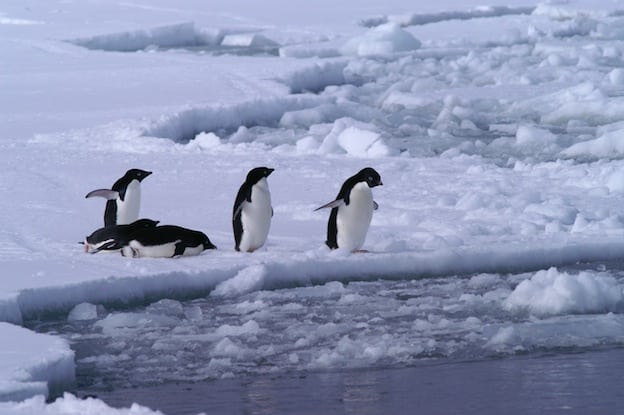
Penguins – Natural Predators

They also have the ability to squirt ink that confuses the predator while they are getting away. Of course this only works though if they are able to know the predator is there. Many of them blend into the surroundings so that they have the element of surprise. This means the squid is lunch before it even knows it was in danger.

Some species of squid though are able to change the color of their skin to match their surroundings. This is a great way for them to hide from predators. Since the squid really has no way to fight except for the hooks some feature on the end of the tentacles they have to rely on being able to hide or to escape from their predators.

Even with such abilities, many of them are no match for the predators that are after them. However, even with squid becoming a tasty meal for many creatures out there, enough of them still remain in the water for it not to be a big concern. Researchers continue to try to document the events that occur when a squid encounters a predator.

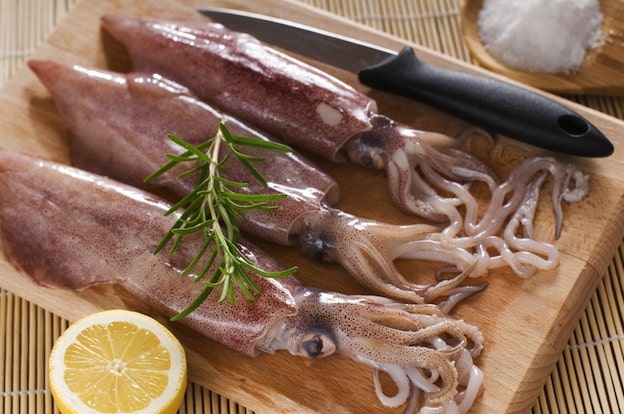
Of course humans have long been an predator of squid as well. They capture them for a variety of reasons. It was learned long ago that squid are a common meal for other predators. Therefore fishermen would use them as bait to capture a variety of fish they were interested in. Depending on the type of squid they used, they could get some very nice sized fish out of the deal as well.

However, most of the squid that humans capture are for food. Millions of pounds of squid are consumed by humans annually. This type of food is called calamari and there are many different ways to make it. You can purchase these squid to make calamari recipes at home. Many restaurants also serve it as an appetizer. If you go to a seafood restaurant then you will likely find it offered as a main course.
 

What Do Squids Eat?

Their common foods to feed on include various types of small fish, crabs, and shrimp.

Vampire Squid Facts – Vampyroteuthis infernalis

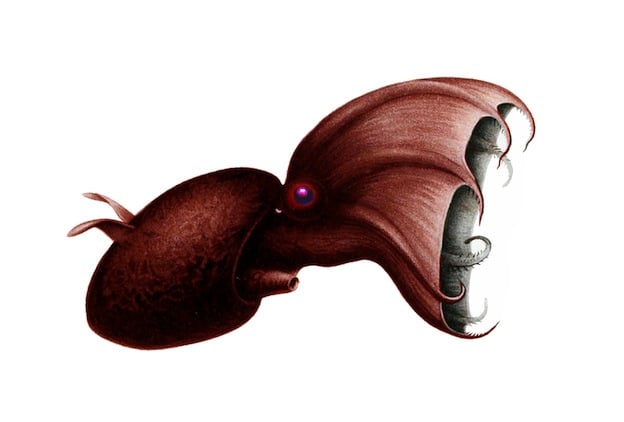
Author of the illustration: Carl Chun

Description

The name of this particular squid is very different, as is the overall appearance of it. The black color is distinct enough in itself. The fact that the long arms flow like a black cape remind many people of a vampire wearing one. The arms have suckers that are hard to see unless you look up close at one.

This is a small squid, approximately one foot in length. The eyes are very often seen as red. They can also appear to be blue though depending on how much light is available when you see one.

Distribution

The tend to be living in the tropical waters that are warmer for them to move around in. They also live in the depths of the water where their dark color helps to serve as camouflage for them to avoid predators. Generally they will live in water that is no more than 45 degrees Fahrenheit.

Vampire squid facts
Vampire squid – Vampyroteuthis infernalis / Author of the illustration: Carl Chun

Behavior

One of the most unique behaviors of the Vampire Squid is that they seem to be flying through the water. Such movements are the result of how they flap their fins to move around. They have the ability to slow down their metabolism to a very low rate. This is how they are able to live in the very cold waters.

It doesn’t have ink to shoot out when it feels it is being threatened. Instead this type of squid offers a type of mucus that shoots out. The mucus is sticky and it can continue to come out for up to ten minutes. It allows the squid to hide from predators as they aren’t very fast swimmers.

Diet /Feeding

The jaws of the Vampire Squid are extremely powerful. However, researchers aren’t fully sure of what all this type of squid consumes. Some theories include a variety of small invertebrates. They don’t need to eat very much though due to their low metabolism. It is believed that it only has to feed a few times per week. This is key to their survival too since it can be difficult at times to find enough food.

Reproduction

It is believed that the Vampire Squid reproduce by the males depositing sperm into the sac of the female. She will deposit fewer eggs than other species and they are also larger in size. The females may store the sperm though for several weeks before they allow it to fertilize the eggs. She will stay in the general area of these deposited eggs until they are ready to hatch. This can take about 13 months.

The females will die soon after their offspring are born. They don’t need to feed for the first few weeks of life. Instead they have an internal type of yolk that they are able to get nutritional value from.

Vampire squid Oral View / Author of the illustration: Ewald Rübsamen

Conservation

Many people are interested in protecting the Vampire Squid due to the unique design of it. They also know too many people have a false conception of it due to the look of it. Those that know better try to educate others so that the false information is less likely to continue spreading.

Human interaction

The Vampire Squid was first identified in 1903. However, it was misclassified as an octopus at that time. Contrary to popular myths this type of squid doesn’t pose any threat at all to humans. Those stories likely developed based on the appearance of this species.

Due to the fact that they live more than 3,000 feet below the surface of cold water areas, not much is known about human interactions with them. Most of the time it is either calculated research or a fishermen accidentally captures one.

Squids in Popular Culture

There are many types of materials out there about squid, including films, and books. Even the history of them is quite amazing. You may think that all we know has just been learned in the past few decades. However, there are plenty of connections to earlier reports. The fact that so little used to be known about squid allowed them to be part of some very intricately woven stories and myths.

Many of them have led to legends that aren’t appealing though. For example when fishermen and their boats disappeared from the water there were stories that giant squid took them in their arms and pulled them into the water. The look of the squid doesn’t give it a good role to play in such stories.

Some popular myths include the giant squid fighting with sperm whales. However, research has proven this doesn’t take place. What spectators may have been seeing though was the squid about to become a food source for the whale. Of course it is going to put up one heck of a fight before it finally has no strength left to battle with.

As early as 4 B.C, there is written documentation of the squid. This is based on the information left by famed Aristotle. He spent a great deal of time talking about the different types of squid as well. Some that he witnesses were more than 30 feet long and weighed up to 700 pounds. There are pictures too of these early forms of squid that help us to know that this is what was being talked about.

In Homers Odyssey, the monster with many heads in the story is depicted about a squid even though it isn’t mentioned by name. However, the early pictures and descriptions of the monster that were used indicate to scientists that there were giant squid found in this area around that period of time. Many of us have had to read this literature and have found the information about the squid to be in a fashion that you won’t find in any other books out there.

Squid in popular culture facts

Squid also were the topic of a variety of scientific papers in the 1850’s. Many of them were written by independent scholars and researchers. Many of them talk about the squid located around the shores of New Zealand. Due to the fact that they live close to the shores there, people were able to observe them without being below the surface of the water.

There are many popular books out there with references to squid in them. Most of us are familiar with the classic Moby Dick. There are also plenty of references to them in 20,000 Leagues under the Sea. Both are also films you can view if you don’t want to read the books. It has been less than 10 years since the first film on squid was completed. In 2001 researchers were able to record squid in their natural environment. The Discovery Channel made a documentary from it called Chasing Giants: On the Trail of the Giant Squid.

Today we know much more about squid than ever before. You will find plenty of great references to them throughout popular culture. You can find these materials at the library as well as online. Taking the time to explore them can help you to learn more about squid. It can also help you to see them from a variety of different angles. What you read can also help you to make up your own opinion about squid. You may not like all of what you read about them, but it is a way to get both sides of the tales.

Squid Conservation Efforts

While the various species of squid aren’t endangered, the fact that they don’t live a very long life is an area of concern. They only survive one year on average with some species making it for two years. The fact that they end up being prey for many other types of animals in the water isn’t anything new.

However, some wonder if the conservation efforts out there to increase other types of creatures will result in a drop of squid. After all, those additional life forms are going to need a great source of food to survive on and squid may be what is turned to in order to provide it. This is why researchers are keeping a good eye on such balances so that they don’t help one creature at the expense of another.

Older squid often die due to their stomach and caecum drying up as they get older. This generally will occur after the cease to take part in reproduction. Without these bodily functions though the food they taken in can’t be broken down and later absorbed for survival.

Efforts are in place to try to get squid in captivity to live longer. Such research is there to try to find out what it is about their environment that can result in them dying at such an early age. Those that don’t die due to predators or stomach problems won’t live more than a few years. By being able to find ways to extend their life though this can help to make sure the numbers of squid stay high enough.

More than two million squid are captured annually as part of the commercial fishing harvest. It is no secret that many people love to consume squid. You likely know it by the name of calamari. Just about every part of the squid can be used to make it as well. Many researchers are concerned about the amount of squid that are harvested annually for this process.

Due to the advanced in boats and ships, nets, and other devices it is faster and easier than ever to capture the squid. Since there is big money involved with the sell of it, there are many people getting involved in this type of industry. Are we going to deplete the available sources of squid? One way that is being controlled is to prevent the capture of squid during the spawning times when mating is going to take place so that the process of reproduction and depositing the eggs can occur.

Some types of squid such as the Colossal squid have been though to be endangered in the past. This was before we had the technology to really find out about them. Since so few of them were seen they were believed to be with very low numbers. However, instead it is now known thanks to underwater cameras that they are a plentiful species.

Even though the squid isn’t endangered at this time, there are some conservation efforts in place. Protecting their natural habitat is one of the main aspects of such efforts. Keeping the water free from pollution is another because it can lead to the premature death of squid. The younger ones often consume bacteria and organisms that can be deadly to them.

The more we learn about the needs of squid, the easier it will be for us to focus our attention on the best ways to conserve them. They are much more important to the overall survival of various life forms in the water than we give them credit for. Even though their own lives are short, they allow many others to flourish for decades.

Squids and Humans

Humans and squids have a history that goes very far back. Some of the very earliest myths about ships disappearing to the depths of the ocean are said to be due to the arms of squids. Of course we know today that didn’t really happen but there are still plenty of stories in some cultures about them being aggressive sea creatures for man to be reckon with.

Squid really don’t pose any threat to humans. While the ink they give out can be poisonous to other creatures in the water, it is too weak to harm humans. In fact, it is often used on restaurants to give some types of pasta a black coloring. Some people are afraid of the giant squids out there due to the appearance. Yet they won’t do anything to you at all. They certainly aren’t going to try to make a meal out of you either.

If you look closely at the eyes of squid, you may be surprised to discover you are viewing what could pass for human eyes. It is fascinating that they do look so similar. Squid also have a 360 degree range of motion with their eyes.

People from all over the world love to consume squid. Calamari is a very common type of food that is made both at home and a variety of sea food restaurants. It can be ordered as an appetizer or as a full meal. The results depend on the species of squid that is used. It also depends on the amount of time that it is cooked and the heat temperature. When using a high temperature you don’t want to exceed three minutes or the texture becomes rubbery. Simmering at a low heat is one of the best ways to bring out the delicious taste of squid.

As a result of this, there is a great deal of money to be made in the industry of commercial hunting for squid. Huge nets and a variety of devices are used to capture them. What is used depends on the location as well as the species of squid being captured. Millions of tons of it are captured annually for humans to consume.

The fact that squid depend on water to live, means humans have to stop polluting it. The lack of attention many humans have for this has lead to squid dying due to various toxins in the water that they live in. The new offspring are the most susceptible to suffering from these types of toxins.

Global warming is another factor that affects squids. Unlike many animals though it can actually do better in many ways due to the warmer temperatures. However, they may become confused about when to mate when the temperatures continue to change and that can decrease their numbers.

Humans have come to depend on squid to offer a supply of food to other animals in the water. They also depend on it for their own consumption not out of necessity but out of a desire to taste something so delicious. There doesn’t seem to be a problem right now for the future of squid though. They aren’t in danger of extinction.

Humans do continue to be fascinated by squid though and more research continues to take place. It has only been in the past 20 years or so that we have gotten many of the significant details about them to come to light. Humans do need to be careful as they are more dependent on the squid to keep the balance of things in nature than most realize and that is important to be aware of.

Squids and Climate Change

We often hear about all of the different creatures out there negatively affected by climate change and global warming. However, there are actually some including the squid which seem to benefit from it. There has been a great deal of research relating to their survival as the warmer temperatures are introduced. Global warming has been a problem for a long time and so identifying how it affects particular creatures is important.

For example their bodies are able to process food easier when the water is warmer. As a result the squid will grow to be larger than otherwise. This is going to be significant in their ability to survive overall out there against predators. The smaller a squid is the more likely it will be consumed. This can lead to more squid due to them becoming mature and having offspring before they become food for something else.

Climate change though can also result in squid becoming more of a food source for other animals than in the past. See, their natural habitat may be destroyed so they are out there trying to survive where they can. At the same time they may been seeking food and needing to consume what they can. Squid may be what they find due to how well the adapt to these changing temperatures. They may stay in these new locations where there are plenty of squid for them to continually feed on.

Others though believe that squid populations will continue to increase due to climate change. They also worry though that there will be too many of them to be able to survive on the amount of food that is readily available for them. This can lead to large numbers of them dying off due to starvation. It can also reduce the value of the genetic pool because those that do survive many not get adequate nutrition. As a result the survival of these different squid species as a whole may be reduced.

However, there is research to indicate that the climate change can affect reproduction rates. The squid will spawn in given locations at certain times of the year. Climate change may affect their ability to do so because their natural instincts become confused by what it taking place. Therefore they may end up not taking part in it. Since a single female can lay thousands of eggs at a time this is going to be a concern.

If the water is too warm it can cause the females to take part in offshore mating instead of the spawning process where she can attract the male with the best genetics. If the water is too cold they may not engage in the behavior at all though. This is because their bodies may not deem it as time to do so.

There is still a great deal of research that has to be done though in order to accurately determine how climate change is going to effect squid populations. What we do know is that it does adversely affect many other animals in the water. Therefore efforts to be able to eliminate global warming and climate change continue to be a top concern of various environmental groups.

You can find out the specific efforts that particular groups are taking part in for the conservation of squid online. You can also find out how you can reduce the future effects of climate change from causing them and other animals harm. Humans need to realize how their efforts can upset the balance of aquatic life. This is just one more way to get yourself involved and to feel good about the efforts you make to make the world a better place.

Squid Species Overview

There are more than 300 known species of squid out there that have been identified. They fall into one of two categories – myopsida and oegopsida. Those that belong to the myopsida group reside in the waters that are very shallow. They also have suckers on their tentacles. The oegopsida squid species live in deeper water regions. They have hooks on the ends of their tentacles. There are some very common types of squid out there for you to learn about.

The California market squid is one that is frequently sold for food sources including calamari. They are mainly found in the bay of Monterey. Along the coast of Florida and the Caribbean you will find the Caribbean Reef squid. They look very similar to fish in regards to the design of their body but they also have arms and fins.

The most aggressive species of squid is the Humboldt which is found in the Eastern part of the Pacific Ocean. They are very long and be up to 100 pounds. They will even attack sharks that are found in the waters. Compared to the smallest species that are less than one inch in length, this is quite a significant difference.

Squid Species
  1. Giant Squid
  2. Colossal Squid
  3. Humboldt Squid
  4. Japanese Flying Squid
  5. Vampire Squid

Don’t base the aggressive nature of a squid on appearance alone though. The one that looks the meanest is the vampire squid. It features a black body with red eyes, and the arms create a flowing look similar to a vampire cape. They don’t move around in the water much though. Instead the patiently sit and wait for their prey to come to them.

The Boston squid has some features that are different from the rest of the species. Both the pen and the fins are much longer than those of other types of squid. It is also very small and has a thin body. The Boston squid is often referred to as the winter squid as well. The summer squid is generally found around New Jersey. It features very short fins and a mantle that is thicker.

The Humboldt Squid is often referred to as a jumbo squid due to the size of it. They are much larger in size than many others. This is why they are often used for human consumption. This species is able to live in the deep waters and they tend to live in groups of about 1,000. This is rare for squid as most of them live alone.

Squid species facts
Caribbean Reef Squid (Sepioteuthis sepioidea)

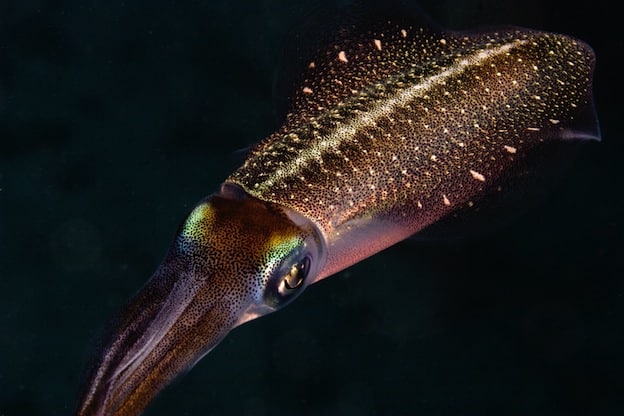
Colossal squid are fascinating to many people due to their color and their size. The tentacles of this species have small teeth along them as well as hooks that are extremely sharp on the ends. It features a body that is very wide compared with other species. This is the largest of all squid in the world.

There are many researchers out there including Steve O’Shea who have dedicated their time and efforts to learning all they can about squid species. Their observations and pictures have helped us to understand more about them. It has also encouraged people to see them as part of the aquatic life out there in a new light. It has even helped to dispel rumors of them being destructive creatures.

It is believed by top researchers that there are many more species of squid out there than they have been able to identify thus far. Hopefully with the continued developments relating to technology more of them will one day be known to us. Some researchers estimate that there are at least 200 unknown species of squid out there at this time. They continue to try to collect information on them.

Squid Scientific Research

Less is known about squid than most other forms of aquatic life. It isn’t that no one is interested but it can be difficult to be able to learn about them. Many species live deep in the water and since they never come out of water it is hard to get information on them. With the technology now available though in the past decade we are finding out much more about them.

It is no secret that many types of aquatic life are in jeopardy of extinction. The squid doesn’t seem to be threatened like others so that is another area of holding up the research. Funding is often limited for such projects, and those in charge often allow it to be used to help those creatures that are at risk of being removed from the Earth forever.

There has been ongoing research for squid since about 1997. A great deal of the funding for it comes from private sources and the actual researchers themselves. They see a need to find out much more. They are also very passionate about these creatures so they love to spend their time to study them.

The giant squid are even harder to learn about then the smaller ones. Beginning in the 1990’s there were many programs in place to study them. Yet the process was slow and it was hard to get good information. The process also took a very long time and funding ran out long before these projects were successful.

This is because they live deep below the surface of the sea. It is also because they can be very large as well as aggressive. Thanks to underwater cameras though we now have plenty of pictures of them. They helped to get more funding for further types of research on squid allocated as well.

Extensive research was conducted in 2004 in Japan. It involved taking underwater pictures of the giant squid in its natural location. More than 500 pictures of these squid were taken before the project was completed. They returned in 2006 to complete a documentary on these large squid as well. Both projects have provided us with a great deal of information regarding these creatures.

Since 2007 there has been ongoing research in Monterey Bay regarding the Humboldt Squid. Plenty has been learned about their life cycle, their eating habits, reproduction, and how they move through the water. Since each species of squid has come similarities it is easy to give an overview of how they all survive. However, with the many variations among these squid, it is also opening up many more questions that need to be investigated further.

The extent of squid research also varies by country. Both the United States and Japan seem to have more of it in place than other countries. This can limit what we know about certain types of squid though. This is because of the distribution areas for the various types of species of squid out there.

Continued research for the squid is necessary in order to learn all there is about them. It is believed that there are hundreds of species of squid out there that we don’t know anything about. It is this information that often drives them to continue seeking new ways of conducting research that is productive and informative.

You can also sign up for updates with many of the current programs that are out there. You can get their newsletters so that as new information comes to light you will be among the first to find out about it. This is an exciting way to learn all you can about squid and the types of research taking place about it.


Squid Breeding and Reproduction

Squid have an interesting way of reproducing. Through careful research the process has been observed. It is the same for the many different species of squid out there. When it is time for the mating to occur, there are large schools of males and females. The process of attracting females begins in the mornings. Around dawn they can be seen swimming rapidly in very large circles.

The females join in this swim in circles which initially can seem very strange and out of control. However, as time goes by you will start to notice that these squid are now swimming in pairs as they go around. These are the couples that have linked up for mating to take place. The males have changing colors on them which is what attracts the females to them. Once a female has shown an interest the mating takes place.

There are some known breeding areas out there where these events take place. Prior to the mating beginning some squid will swim long distances to take part in it. The entire process is actually quite fascinating for researchers to follow. The males can be very aggressive too when it comes to finding a female to mate with.

While you can’t see it by looking at the females, they have an ink sac hidden under a set of glands in the gills. This serves as the protective shell for the eggs she will produce. During the mating process the sperm from the males are placed inside of this sac where they will fertilize her eggs. When you look closely at the arms of a squid, you will notice the male has one that is shorter than the rest. This is what is used to place the sperm into the female.

Thousands of eggs can be produced at a time by one female. It isn’t known how the eggs develop inside of the body of the squid. More research has to be done in that area before we can uncover all of those details. What we do know is that the size of the eggs depends on the species, but they are all quite small in size.

For some species the number can be up to 70,000! However, many of them are eaten by predators so there is never an overpopulation of squid out there in the waters. Most of these eggs never end up becoming offspring.

She will distribute them in hidden areas of the water including under rocks or in various holes and crevices she can find. It can be up to eight weeks before those eggs hatch so keeping them save from predators can be difficult. The female squid don’t wait around for them to hatch, they leave after depositing them.

The baby squid fend for themselves from the very start. They already know how to swim. Yet many of these offspring are killed in the first few days of life. For many species of squid, the parents die soon after reproducing due to the very short life span of these creatures.

From the moment that a squid is born, the fight to survive is on. They have to find enough food for their own survival. However, at the same time they are struggling to keep predators at bay. The life span for a squid that does survive against the odds when they are young is only about a year or two. They live fast lives that are very difficult most of the time.

Due to this, most males and females will only mate once in their lives. For some species they are able to do so a second time before they die.

Scroll to Top